


The cybersecurity threat landscape continues to intensify for small and medium-sized businesses. Ransomware has become one of the most destructive cyber threats facing today’s SMBs. These malicious programs infiltrate corporate networks, encrypt critical business files, and bring operations to a standstill until a ransom is paid.
Believing that your business is too small to attract cybercriminals is a costly mistake. Attackers use automated tools that continuously scan the internet for security vulnerabilities, regardless of company size or industry. To effectively protect your organization, you first need to identify the weaknesses within your own IT environment. XEFI outlines the seven warning signs that indicate your SMB is currently vulnerable to a ransomware attack.
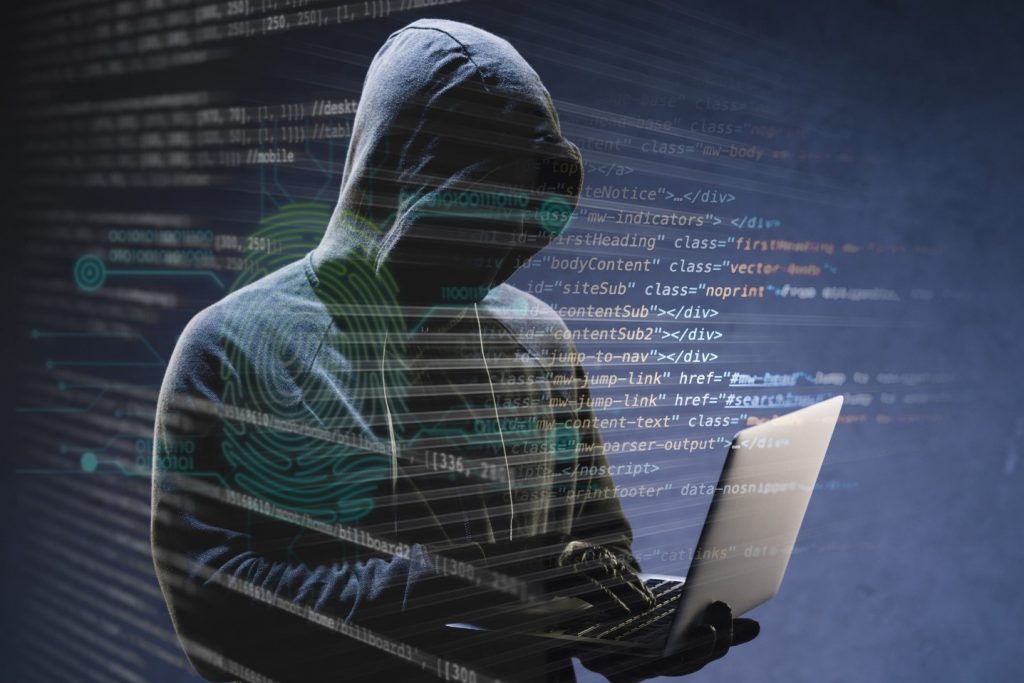
1. Your Employees Have Never Received Cybersecurity Awareness Training
The primary entry point for ransomware is rarely a sophisticated technical vulnerability—it’s human error. More than 80% of successful cyberattacks begin with a phishing email opened by an employee. If your teams have never been trained to recognize the warning signs of fraudulent emails, your business remains constantly exposed. A single click on a malicious attachment or carefully crafted phishing link is enough to compromise your entire network within seconds.
Cybercriminals are becoming increasingly sophisticated. They can convincingly imitate emails from trusted suppliers, tax authorities, or delivery companies. Without strong security habits—such as verifying the sender’s email address or confirming unusual payment requests through another communication channel—employees remain easy targets. A lack of ongoing cybersecurity awareness makes your workforce the weakest link in your security strategy.
Cybersecurity should never be limited to the IT department. It must become a company-wide culture embraced by everyone, from administrative staff to executive leadership. XEFI helps SMBs implement practical cybersecurity awareness sessions that teach employees how to recognize suspicious emails and transform human behavior into a powerful first line of defense.
Key Takeaways
- Targeted phishing: The primary method used to deploy ransomware.
- Lack of awareness: Employees open attachments without verifying the sender.
- Evolving threats: Fraudulent emails are becoming increasingly convincing.
- Security culture: A critical investment in collective cyber awareness.
2. Your Operating Systems and Software Are Not Updated Regularly
Allowing software updates to accumulate on your servers, workstations, or network equipment is equivalent to leaving your office doors wide open overnight. Software vendors such as Microsoft and Adobe regularly release security patches to fix newly discovered vulnerabilities. Cybercriminals immediately analyze these updates to develop ransomware capable of exploiting systems that haven’t yet been patched.
In many SMBs without a dedicated IT department, patch management is often overlooked. Employees repeatedly postpone restart notifications to avoid interrupting their work. Local servers sometimes run for months without critical updates because companies fear disrupting business applications. This lack of technical discipline provides attackers with direct access to your most valuable data.
Protecting an IT infrastructure requires centralized and fully automated patch management. With XEFI Managed Services, critical security updates are tested before being automatically deployed across all your systems during off-business hours. This eliminates software vulnerabilities before cybercriminals have the opportunity to exploit them.
Key Takeaways
- Unpatched vulnerabilities: Known security flaws remain exposed.
- Delayed updates: User habits weaken overall cybersecurity.
- Lack of centralized management: No visibility into the security status of all devices.
- Automated deployment: The only reliable way to maintain continuous protection.
3. You Use the Same Storage Solution for Daily Work and Backups
Confusing file synchronization with true data backup remains one of the most common mistakes among SMBs. If you rely on platforms such as Google Drive or OneDrive without professional backup isolation—or if your external backup drive remains permanently connected to your server—your IT infrastructure is highly vulnerable.
Ransomware doesn’t only attack the infected computer. It spreads to every accessible storage location across your local network.
When files on a workstation become encrypted, synchronization software interprets the changes as legitimate updates and immediately uploads the encrypted versions to the cloud, overwriting healthy copies. Likewise, ransomware is specifically designed to detect USB-connected external drives and shared network folders, encrypting them as a priority and rendering local backups useless.
To effectively counter this threat, your infrastructure should include an isolated, immutable offsite backup strategy. XEFI Cloud Backup solutions use secure transfer protocols completely separated from your local network. Once stored in our data centers, your backup copies become invisible and inaccessible to ransomware. In the event of an attack, you always have a clean recovery point, allowing you to restore your systems without paying a ransom.
Key Takeaways
- Rapid malware propagation: Ransomware encrypts every connected storage device.
- Synchronization pitfalls: Corrupted files overwrite healthy cloud versions.
- Lack of isolation: Local backups share the same vulnerabilities as production systems.
- Immutable backups: The only backup strategy designed to withstand ransomware attacks.
4. Folder Access Permissions Are Not Properly Restricted
The principle of least privilege is one of the fundamental pillars of cybersecurity, yet it remains underused in many SMBs. If every employee has administrator rights on their workstation or unrestricted access to every shared folder—including finance, HR, executive, and technical directories—the risk of ransomware spreading throughout your organization increases dramatically. Malware automatically inherits the access rights of the infected user.
If a trainee’s laptop or a field technician’s workstation becomes infected and that user has unrestricted access to executive or accounting folders, ransomware can encrypt those critical directories within minutes. Conversely, limiting permissions to what each employee genuinely needs significantly reduces the scope and impact of an attack.
A secure IT environment requires structured user profiles and carefully controlled software installation privileges. XEFI assesses your organization’s infrastructure to implement secure, segmented file-sharing environments. By applying the principle of least privilege, we significantly reduce your attack surface while simplifying incident response and recovery.
Key Takeaways
- Excessive privileges: Employees have unnecessary administrative rights.
- Accelerated propagation: Malware exploits unrestricted access permissions.
- Lack of segmentation: No logical separation between departments.
- Restricted user profiles: A simple but highly effective cybersecurity measure.
5. Remote Work and Remote Access Lack Strong Security Controls
Remote and hybrid working provide flexibility and improve productivity, but they also introduce significant cybersecurity challenges. If your employees connect to corporate systems from home or while traveling using only a password—without a secure Virtual Private Network (VPN) or Multi-Factor Authentication (MFA)—your business faces serious security risks.
Home internet connections and public Wi-Fi networks in hotels, airports, and cafés are considerably less secure than corporate networks. Cybercriminals can intercept login credentials or exploit vulnerable home routers to compromise employee devices. Once they gain access, they use legitimate remote connections to infiltrate your company’s infrastructure and deploy ransomware directly onto critical systems.
Today, Multi-Factor Authentication (MFA) is no longer optional—it’s essential. MFA requires users to verify every login with a temporary code sent to a trusted device in addition to their password. Even if attackers steal user credentials, they cannot access your network without the second authentication factor.
XEFI deploys and manages secure VPN and MFA solutions to ensure your remote workforce remains protected wherever they work.
Key Takeaways
- Unsecured connections: Employees use public Wi-Fi without adequate protection.
- Weak passwords: Easily guessed or compromised credentials.
- No Multi-Factor Authentication: A single stolen password can compromise your network.
- VPN and MFA: The essential cybersecurity combination for secure remote work.
6. You Rely Solely on a Traditional or Consumer-Grade Antivirus
Relying on a conventional antivirus solution—especially a free or consumer-grade product—to protect an SMB against today’s cyber threats is a dangerous misconception. Traditional antivirus software uses signature-based detection, meaning it can only identify malware that has already been discovered and catalogued in global threat databases. Meanwhile, ransomware developers continuously modify their code, creating new variants capable of bypassing these passive defenses.
Modern cyberattacks frequently leverage so-called zero-day vulnerabilities—security flaws that have not yet been identified—or execute malicious scripts directly in a computer’s memory without leaving suspicious files on the hard drive. Traditional antivirus software is effectively blind to these stealth techniques. In many cases, it only raises an alert once the ransomware has already begun encrypting your business files—when it’s far too late to prevent damage.
Effective business protection requires next-generation security solutions such as EDR (Endpoint Detection and Response). Unlike traditional antivirus software, EDR doesn’t simply scan files for known malware signatures. Instead, it continuously monitors the behavior of endpoints and servers. If a process suddenly starts modifying or encrypting an unusually large number of files, the EDR platform immediately recognizes the activity as malicious, isolates the infected device from the network, and stops the ransomware before it can spread further.
Key Takeaways
- Signature-based detection: An outdated approach that cannot stop new ransomware variants.
- Limited visibility: Traditional antivirus cannot detect sophisticated behavioral attacks.
- Delayed response: Alerts often arrive only after files have already been encrypted.
- EDR technology: Real-time behavioral monitoring that detects and blocks threats immediately.
7. You Don’t Have a Documented and Tested Disaster Recovery Plan (DRP)
The final—and perhaps most critical—sign that your SMB is vulnerable is the absence of a documented and regularly tested Disaster Recovery Plan (DRP). If your business has no formal recovery strategy that has been validated by IT professionals, you are operating without a safety net. In cybersecurity, zero risk does not exist. The real question isn’t if your organization will be attacked, but when—and whether you’ll be prepared to recover.
Following a successful ransomware attack, panic often spreads quickly throughout the organization. Who should be contacted first? Should the servers be shut down immediately, potentially destroying valuable forensic evidence? How do you communicate with customers when your email system is unavailable? Without a clearly documented recovery process that defines responsibilities and recovery priorities, every lost hour translates into increased financial losses and long-term reputational damage.
XEFI’s Disaster Recovery Plan provides your business with a proven business continuity strategy. It defines the technical and organizational procedures required to rebuild your IT environment within hours using our sovereign cloud data centers. We also perform regular recovery simulations to ensure that, when a cyberattack or disaster occurs, your employees can resume operations quickly, securely, and with minimal disruption to your business.
Key Takeaways
- Improvised crisis management: Increases the likelihood of costly mistakes during an incident.
- Extended downtime: Recovery takes longer without a structured restoration process.
- Direct financial impact: Every additional hour of downtime increases business losses.
- Managed DRP: A clear roadmap that enables your organization to recover with confidence.
FAQ: Essential Questions About SMB Ransomware Risks
Are Macs and smartphones protected against ransomware?
No. This remains one of the most common misconceptions. Although Windows systems have historically been the primary targets, cybercriminals now develop sophisticated ransomware capable of infecting macOS and Linux environments as well. Business smartphones and tablets can also become infected through malicious applications or browser vulnerabilities, potentially serving as entry points into your corporate network.
What should I do first if I suspect a ransomware attack?
If your files suddenly become unreadable, change file extensions, or display a ransom note, immediately disconnect the affected computer from the network by unplugging the Ethernet cable or disabling its Wi-Fi connection.
Do not abruptly power off the device, as this may corrupt the system or destroy valuable forensic evidence stored in memory. Instead, isolate the device to prevent the malware from spreading to other workstations and servers, then contact your IT service provider immediately.
How much does enterprise-grade cybersecurity with XEFI cost?
Cybersecurity with XEFI is not an unpredictable expense—it’s a fixed monthly investment tailored to the actual size of your business. Pricing is calculated per protected workstation and server.
This subscription model enables SMBs to benefit from enterprise-grade technologies—including Managed EDR, Sovereign Cloud, Multi-Factor Authentication (MFA), and 24/7 monitoring—at a transparent and predictable cost.
Action Plan: Protect Your SMB Against Ransomware
If your organization recognizes one or more of these seven warning signs, your exposure to ransomware is likely significant. Cybersecurity should no longer be viewed as an optional technical consideration—it is a fundamental pillar of modern business resilience and governance.
To reduce your risk immediately, implement the following action plan:
- Deploy Multi-Factor Authentication (MFA) across all remote access and business email accounts.
- Replace your traditional antivirus solution with a managed Endpoint Detection and Response (EDR) platform.
- Schedule phishing awareness training for every employee.
- Entrust your backup strategy to a trusted provider operating sovereign European data centers.
Don’t Let Cybercriminals Put Your Defenses to the Test
XEFI’s cybersecurity specialists offer a free cybersecurity assessment of your existing IT infrastructure to identify vulnerabilities and design a tailored protection strategy for your business.