


Moving to the cloud has become a key driver of flexibility, business continuity, and competitiveness for SMEs. However, outsourcing your data should never mean losing control or stepping into an unpredictable financial commitment. The offerings of major U.S. hyperscalers (GAFAM) often raise concerns among business leaders about geopolitical dependency and a lack of transparency regarding where their data is stored. The ideal solution lies in striking the right balance between flexibility and digital sovereignty.
That is XEFI’s positioning:
“The cloud delivers flexibility, but only local expertise guarantees security. Your business data deserves a sovereign cloud managed by IT specialists located less than 30 km (20 miles) from your company.”
Discover how to migrate your servers and business applications seamlessly, cost-effectively, and with complete confidentiality.
Cloud Benefits for SMEs: Flexibility, Performance, and Collaboration
Modernizing an SME’s IT infrastructure inevitably means moving away from purely on-premises environments toward cloud-based architectures. The benefits of cloud computing for SMEs go far beyond following a technology trend—they fundamentally improve operational agility and day-to-day efficiency. By eliminating the burden of maintaining noisy, power-hungry servers in an on-site server room, cloud computing becomes a true growth accelerator, allowing your IT capabilities to scale with your business needs.
Universal Accessibility and Collaborative Working
One of the first tangible benefits business leaders experience is unrestricted access to information.
With a properly configured cloud infrastructure, employees can securely access company data anytime and from anywhere. Whether working from a client site, remotely from home, or at another company location, they enjoy the same access to business applications, documents, and systems as if they were sitting at headquarters.
Real-time synchronization also transforms collaboration by allowing multiple employees to work simultaneously on the same files without creating duplicate versions or conflicting edits.
Cloud Flexibility That Supports Business Agility
Another major advantage of cloud computing is scalability—the ability to adjust computing power, storage capacity, and software licenses according to changing business requirements.
If your SME experiences seasonal peaks or hires ten new employees to support a major project, expanding your cloud resources can be accomplished within minutes through your IT partner.
Conversely, if activity slows, resources can be reduced just as easily.
This flexibility eliminates the need for costly hardware investments that may remain underutilized.
Practical Example
A 25-person architectural firm regularly struggled to share large CAD files with construction sites. After migrating its CAD infrastructure and project databases to a dedicated cloud platform, site managers were able to access and edit plans directly from their tablets, reducing correction cycles and communication errors by 35%.
📌 Good to Know: Freedom Without Boundaries
Cloud computing frees your SME from the physical limitations of your office. Your data and business applications travel with you, creating a dynamic, scalable, and collaborative working environment.
Protecting Your SME’s Data in the Cloud: Understanding the Real Risks
While the advantages of cloud migration are undeniable, protecting your company’s digital assets remains a top priority.
For many business owners, the greatest concern is the feeling of “losing control” over strategic files once they leave the company premises.
Cloud security risks are real—but in most cases, they result from inadequate planning or poor implementation rather than from cloud technology itself.
Understanding these risks is the first step toward deploying the right safeguards.
Digital Sovereignty and the Cloud Act Challenge
One of the most important strategic decisions is selecting the right cloud provider.
Entrusting your customer data, intellectual property, or financial records to major U.S.-based cloud providers may expose your business to the U.S. Cloud Act.
Under this legislation, U.S. authorities may request access to data managed by companies subject to American law—even when that data is physically hosted in Europe.
For SMEs seeking full GDPR compliance and maximum protection of sensitive business information, choosing a French sovereign cloud solution provides an essential layer of legal and geopolitical security.
Cybersecurity Threats and Internet Connectivity Risks
From a technical perspective, migrating to the cloud changes the cybersecurity perimeter of your organization.
Threats such as compromised user credentials, phishing attacks, or intercepted unencrypted traffic must be addressed through robust security measures.
In addition, cloud-based businesses become increasingly dependent on reliable internet connectivity.
A prolonged network outage can disrupt operations unless redundancy measures—such as dual fiber connections backed up by 4G or 5G failover—have been implemented by your trusted local IT partner.
Practical Example
A wholesale distribution company experienced an attempted intrusion through the cloud account of a sales representative whose password had been compromised on a third-party website.
Because multi-factor authentication (MFA) and end-to-end encrypted connections had already been deployed by its IT integrator, access was immediately blocked, preventing any compromise of the customer database.
📌 Good to Know: You’re Not Losing Control
Moving your servers to the cloud does not mean giving up control of your data.
On the contrary, partnering with a sovereign cloud provider enables your business to benefit from enterprise-grade encryption, cybersecurity, and monitoring capabilities that would often be too costly for an SME to build and maintain internally.
The Cost of Cloud Migration for Businesses: Financial Analysis and Return on Investment
The financial assessment of a cloud migration project is the third key decision-making factor for business leaders. Accurately evaluating the cost of cloud migration for a business requires understanding a fundamental shift in financial strategy: moving from a capital expenditure (CAPEX) model to an operating expenditure (OPEX) model. Instead of making a significant investment every five years to replace aging physical servers, businesses spread their IT costs through a predictable monthly subscription based on their actual usage.
Eliminating the Hidden Costs of On-Premises IT
To accurately measure the return on investment (ROI) of cloud storage compared to an on-premises infrastructure, business owners must account for all the hidden costs associated with maintaining physical servers on-site. These often-overlooked expenses can have a significant impact on an SME’s annual budget:
- Power Consumption: Running servers and dedicated cooling systems 24/7.
- Hardware Maintenance: Replacing failed hard drives, UPS systems, and updating virtualization platforms.
- Insurance and Physical Security: Protecting server rooms against fire, flooding, and theft.
- Internal IT Time: The hours your team spends managing daily backups or recovering failed systems.
A Transparent and Predictable Cloud IT Budget for SMEs
Professional cloud solutions provide the financial transparency that business leaders and finance teams need. A monthly subscription typically includes virtual servers, highly available storage, automated backups, perimeter security, and managed IT services.
The return on investment goes beyond reducing electricity and maintenance costs. The greatest financial benefit comes from avoiding the enormous costs associated with business downtime caused by aging or failing hardware.
Practical Example
An industrial SME was preparing to invest €28,000 to replace two aging file servers that had reached end-of-life. After a comparative financial analysis, the company chose a privately hosted cloud solution instead. It now pays a fixed monthly subscription per user, preserving cash flow that was subsequently invested in hiring an additional production technician.
📌 Good to Know: From Capital Investment to Pay-As-You-Go
Cloud computing transforms heavy, unpredictable capital investments into manageable operating expenses. You only pay for the computing resources your teams actually use each month, making cash flow management simpler and more predictable.
The XEFI Approach: Combining the Power of a Sovereign Cloud with Local Expertise
Many business leaders hesitate to move to the cloud because they fear becoming just another anonymous customer of a global provider. At XEFI, we’ve built a unique model of trust that addresses those concerns.
We understand that business owners want to know exactly where their data is stored and who they can rely on when issues arise.
Our commitment is simple:
“The cloud delivers flexibility, but only local expertise guarantees security. Your business data deserves a sovereign cloud managed by IT specialists located less than 30 miles from your company.”
This gives you the best of modern cloud technology without sacrificing personal support.
Our Own Highly Secure Data Centers Located in France
Choosing XEFI for your cloud solutions for SMEs means choosing complete digital sovereignty.
Your business data is never scattered across data centers around the world or exposed to foreign jurisdictions.
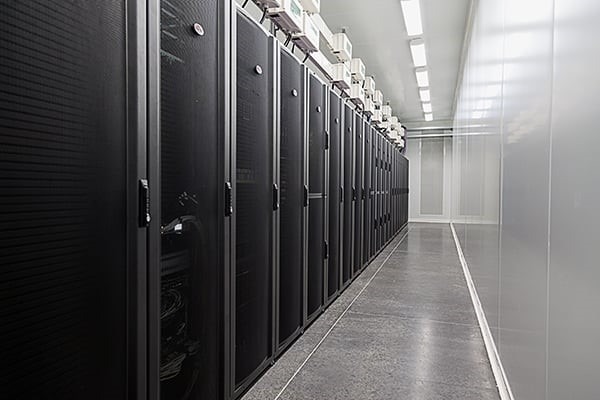
Instead, it is hosted within XEFI’s own next-generation data centers located exclusively in France.
These state-of-the-art facilities meet some of the industry’s most demanding security and environmental standards—including certifications for hosting healthcare data—ensuring maximum availability for your mission-critical applications and business backups.
Managed Cloud Services Less Than 30 km Away: The Value of Local Presence
The real strength of the XEFI network lies in combining industrial-scale cloud infrastructure with a nationwide network of local agencies.
Although cloud migration itself can largely be managed remotely, successful user adoption, workstation configuration, and ongoing support require people on the ground.
Our local technicians are available to visit your offices whenever needed—whether to respond to an incident, configure new equipment, or train your employees.
We’re not simply a cloud provider—we’re your local technology partner.
Practical Example
A major regional automotive dealership entrusted its cloud migration to its local XEFI agency.
Its email and business management servers were transferred to the XEFI Data Center over a weekend.
By 7:30 a.m. on Monday, two local XEFI technicians were already on-site, assisting employees individually and ensuring that the workshops opened without any disruption or loss of productivity.
📌 Good to Know: The Best of Both Worlds
You no longer have to choose between the performance of a modern cloud infrastructure and the reassurance of working with a trusted local IT provider.
XEFI combines the power of its sovereign French data centers with the responsiveness of a dedicated technical team located close to your business.
FAQ: Everything SMEs Need to Know About Moving to the Cloud
What are the benefits of cloud computing for an SME?
Cloud computing offers exceptional flexibility by allowing your IT resources to scale in real time according to your business needs. It also enables secure remote working and collaboration by making business data accessible from anywhere while eliminating the burden of maintaining aging on-premises servers.
What are the risks of migrating to the cloud?
The primary risks involve dependence on internet connectivity and choosing the right cloud provider. Hosting sensitive business information with providers subject to foreign legislation—such as the U.S. Cloud Act—may expose confidential data to legal or security risks. This is why a highly secure sovereign cloud hosted in France is strongly recommended.
How much does cloud migration cost for an SME?
The cost depends on your data volume, business applications, and number of users. Cloud migration replaces large upfront hardware investments (CAPEX) with a predictable monthly subscription (OPEX) that typically includes storage, cybersecurity, backups, maintenance, and managed services—eliminating many hidden IT costs.
What’s the difference between a private cloud and a public cloud?
A public cloud shares a large infrastructure among millions of users, as seen with services such as Microsoft 365 or Google Drive, offering excellent scalability and flexibility.
A private cloud, by contrast, provides your business with a dedicated virtual infrastructure, ensuring greater access control, stronger security, and complete isolation of sensitive business data.
Conclusion: Your Next Steps Toward a Successful Cloud Migration
Migrating your SME’s IT infrastructure to the cloud is no longer simply a technical decision—it’s a strategic investment in the future of your business.
By choosing a gradual migration supported by a trusted local IT partner capable of guaranteeing digital sovereignty, you transform your IT infrastructure into a secure, scalable, and highly productive business asset.
Ready to Begin Your Cloud Migration with Confidence?
- Assess Your Cloud Readiness: Request a comprehensive audit from your local XEFI agency to evaluate your existing applications and internet connectivity.
- Build a Tailored Budget: Receive a clear and transparent quotation based on a fixed monthly subscription, with no hidden costs or unexpected charges.
- Plan a Seamless Migration: Let our local experts securely transfer your data to XEFI’s sovereign French data centers, ensuring a smooth migration with zero disruption to your business operations.